Help Your Child Focus by Covering the Basics First
Before we move on to the next focus strategy, I want to talk about something that seems almost too simple to count as a strategy:
Cover the basics.
Before we ask our kids to sit down, pay attention, listen to directions, remember what they just learned, or work independently, we need to make sure their bodies and brains have what they need to function well.
That means starting with things like:
- adequate sleep
- regular meals and snacks
- nutritious food
- time outside
- movement
- predictable routines
These things aren’t separate from learning.
They are part of learning.
And I think this becomes especially important when we’re homeschooling kids with ADHD, autism, or other learning differences.

Want to put this into practice? Get the free download:
Prefer to listen? Listen to the related podcast below
Your child’s body comes to school with them
It’s easy to think about focus as something that happens entirely in the brain.
But our brains don’t operate separately from the rest of our bodies.
If your child is exhausted, hungry, overstimulated, or hasn’t had enough opportunity to move, asking them to suddenly sit down and concentrate can be a lot harder.
For many neurodivergent children, the demands of the environment can feel especially intense. Their attention, regulation, sensory processing, and emotional responses may be affected by things that seem small to us.
That means the basics matter.
A lot.
So before I ask my child to focus harder, I want to ask:
Did they sleep enough?
Have they eaten?
Have they had a chance to move?
Have they been outside?
Are they regulated enough to actually learn right now?
Sometimes the focus problem isn’t that my child needs a better incentive or a more engaging lesson.
Sometimes they’re just tired.
Or hungry.
Or they’ve been inside all morning and desperately need to move their body.
Start with sleep
Sleep is a huge piece of the focus puzzle.
Children need substantially more sleep than adults, and adequate sleep supports attention, learning, mood, memory, and overall functioning.
As a general guideline, children ages 6–12 need about 9–12 hours of sleep per night, while teenagers ages 13–18 need about 8–10 hours.
| Age | Recommended Sleep |
|---|---|
| Children 6–12 | 9–12 hours |
| Teens 13–18 | 8–10 hours |
For some of our kids, especially kids with ADHD, getting adequate sleep can be particularly challenging.
And that’s where a consistent bedtime routine can help.
A predictable rhythm gives your child’s body cues that it’s time to begin winding down.
That might look like:
- a consistent bedtime
- dimming the lights
- putting screens away
- getting ready for bed in the same general order each night
- reading
- prayer or another calming family routine
- a consistent lights-out time
It doesn’t have to be elaborate.
Consistency is often more helpful than creating the perfect bedtime routine.
But what about teenagers?
This gets a little trickier as our kids get older.
And if you’ve got a teenager, you probably know exactly what I’m talking about.
Sometimes the moment the younger kids are finally in bed and the house gets quiet is when your teenager suddenly wants to talk.
And those conversations matter.
Sometimes late at night is when they finally open up about something they’ve been thinking about all day.
I don’t want to create such a rigid bedtime that I miss those opportunities for connection.
So instead of simply saying, “Go to bed!”, we can help our teens build healthy habits around sleep while still making room for connection.
A few things that can help:
Have a consistent screens-off time.
The goal isn’t necessarily that your teenager has to be asleep at 9:00.
It’s that there is a predictable point when the stimulation of phones, gaming, social media, and other screens begins to wind down.
Keep the bedroom as a place for sleep.
If possible, minimize distractions in the bedroom and avoid having screens become the primary activity happening there.
Establish a lights-out time.
This gives your teen a concrete target rather than an indefinite “You should probably go to bed.”
Work backward from wake-up time.
If your teenager needs 8–10 hours of sleep, work backward from when they need to get up.
If they need to wake at 7:00, for example, getting enough sleep may mean lights out somewhere around 9:00–11:00, depending on their individual needs and how long it takes them to fall asleep.
Teach them why sleep matters.
As our kids get older, I want them to understand that sleep isn’t just something Mom is forcing them to do.
Sleep affects their ability to think, learn, regulate emotions, perform physically, and function throughout the day. It also supports overall health.
We’re not just enforcing a bedtime.
We’re teaching them how to take care of themselves.
And that is a skill they will need long after they leave our homes.
Don’t forget about food
The other basic we need to pay attention to is nutrition.
If your child is trying to learn while they’re hungry, it’s not surprising if focusing becomes much harder.
This is especially easy to miss during a busy homeschool day.
We’re trying to finish the math lesson.
Someone needs help with reading.
The toddler needs something.
And suddenly it’s noon and someone hasn’t eaten since breakfast.
Regular meals and snacks can help prevent hunger from becoming another obstacle to learning.
When possible, I like to include protein and healthy fats in meals and snacks because they can help make meals more satisfying and provide sustained energy.
That might look like:
- eggs and toast
- Greek yogurt with fruit
- cheese and crackers
- peanut or nut butter with fruit or toast
- hummus and vegetables
- a smoothie with yogurt or another protein source
- chicken, rice, and vegetables
- avocado with eggs
- a sandwich with protein and vegetables
It doesn’t need to be complicated.
And please don’t turn this into another area where you feel like you have to be the perfect homeschool mom who makes elaborate, perfectly balanced meals every day.
We’re covering the basics, not entering a cooking competition.
Get outside
Another simple strategy is to get your kids outside.
Natural light, especially earlier in the day, helps support our body’s circadian rhythm—the internal clock that helps regulate sleep and wakefulness.
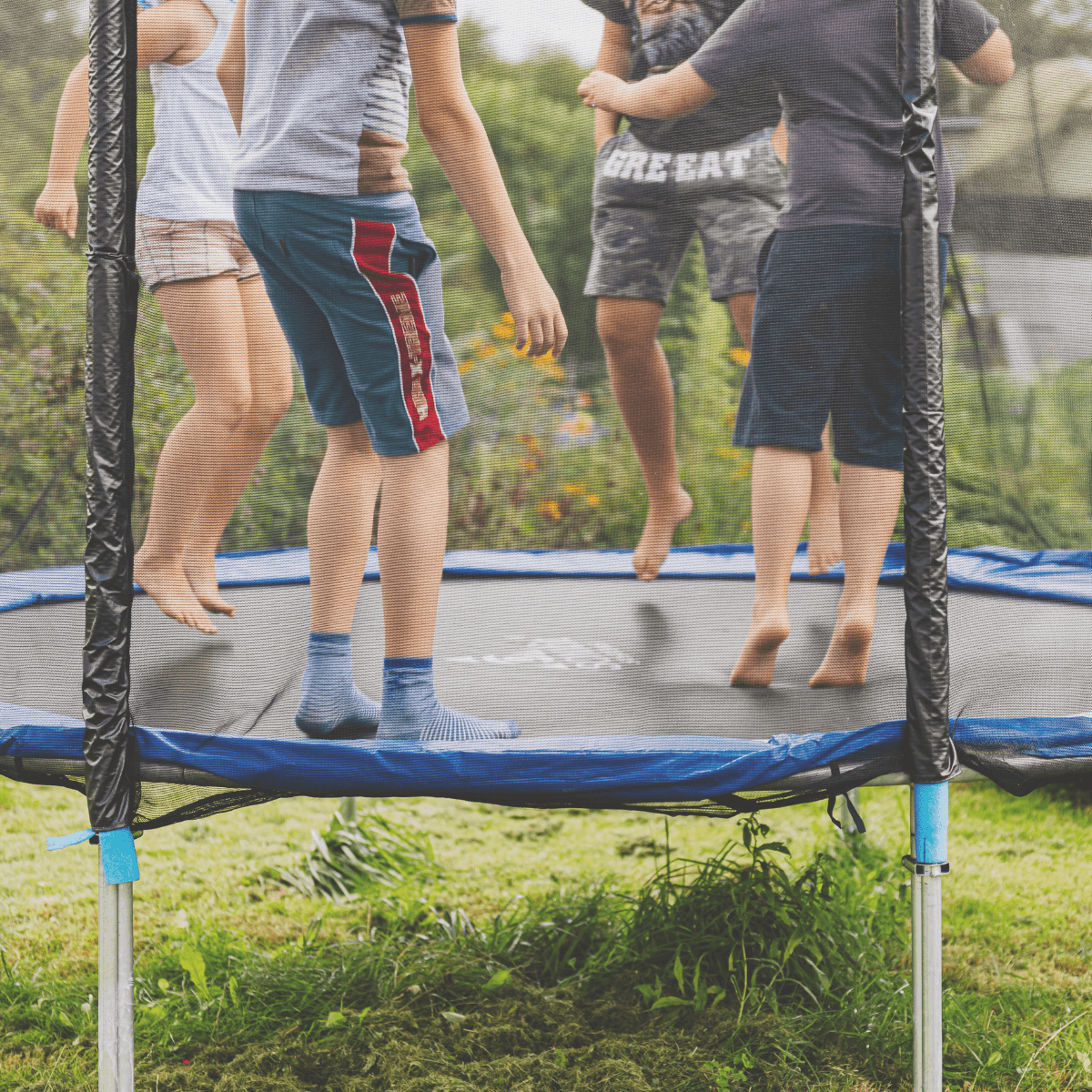
And being outside also gives kids opportunities for movement, sensory input, and a break from the indoor environment.
It can be as simple as:
- eating breakfast outside
- taking a morning walk
- playing in the backyard
- riding bikes
- walking the dog
- spending recess outdoors
- doing part of your schoolwork outside
- taking five minutes to go look for something in nature
You don’t have to turn this into a nature-study curriculum.
Go outside.
Sometimes that’s enough.
Before you ask for more focus, check the basics
This is one of the questions I want to keep in the back of my mind when I’m homeschooling:
What does my child need before I ask them to do more?
If my child is struggling to focus, I don’t always need to immediately find a new strategy to make them focus harder.
Sometimes I need to look at the bigger picture.
Did they sleep?
Did they eat?
Have they moved?
Have they been outside?
Are they overwhelmed?
Are they thirsty?
Have they had enough connection with me?
Are we asking them to do focused work at a time of day when their body is simply not ready for it?
These questions don’t solve every attention challenge.
But they’re a good place to start.
Because focus isn’t just a character trait our kids either have or don’t have.
It’s affected by the conditions around them.
And when we’re homeschooling, we have an incredible opportunity to create those conditions intentionally.
We can build our days around our children’s actual needs instead of expecting our children to push through those needs in order to fit our schedule.
So before you add another focus strategy, another reward system, another timer, or another visual schedule, take a step back.
Cover the basics first.
Sometimes the most powerful homeschool support isn’t another academic strategy.
Sometimes it’s breakfast.
A walk outside.
A glass of water.
An earlier bedtime.
A snack.
A few minutes of connection.
Or simply recognizing that your child is tired and deciding that today, the lesson can wait.